
 Polski
 English GB
 Deutsch
 Français
 Italiano
 Čeština
 Nederlands
 Español


Let's be honest, most of us have considered or tried using non-original replacements in one form or another. Take inkjet printing, for example – the market is flooded with third-party manufacturers. OEMs (Original Equipment Manufacturers) now have to offer more than just quality to keep their customers loyal.
A good example is HP’s “Instant Ink” program, which offers both quality and convenience by delivering original HP ink cartridges with attractive monthly pricing plans and automatic online ordering.
HP has regained a significant portion of business lost to third-party suppliers, but the truth is that most inkjet printers can operate quite well with inks from other manufacturers. Aside from variations in ink quality, such cartridges will largely perform similarly to OEM ones.
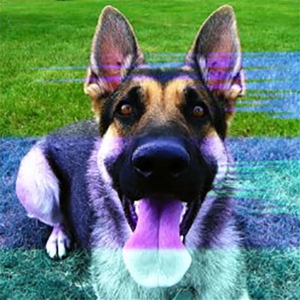
Here’s a typical printing problem that can result from using replacements in sublimation printers. The same cannot be said about dye-sublimation (dye-sub) technology due to the technical complexity of its media.
“Most inkjet printers can work with third-party inks, but the same cannot be said for photographic dye-sublimation printers.” Why is that?
Developing consumables for dye-sublimation takes from 12 to 18 months, as the technology used is extremely complex. Both the color ribbon and the “paper” must be perfectly matched to the transport system of a specific printer. The mechanical parts of the printer are highly sensitive to media that may exert extra stress on the thermal head, rollers, and motors. Users of substitutes may find their printer’s lifespan significantly shortened, and using non-original media will void the printer warranty.
Media in dye-sublimation (detailed technical overview)
D2T2 stands for “Dye Diffusion Thermal Transfer” or simply “dye-sublimation”.
In photographic printing, D2T2 media consist of a color ribbon and a receiver on paper. The thermal head sublimates (transfers) the dye onto the medium.
The color ribbon is made of a thin layer of polyethylene terephthalate (PET) coated on one side with repeating CMY dye panels (mixed in a solvent) and a laminate that protects the print. The solvent evaporates during coating, leaving a kinetically stable but thermodynamically unstable dye layer in a polymer binder.
The sublimation temperature of the dye ranges from 80–120 ºC, ensuring good color rendering during printing and high stability during storage. On the underside of the ribbon is another polymer coating – the back layer – which helps the ribbon slide across the thermal head during the printing process.
There are many dye-sublimation dyes on the market, but for OEM photographic media they are designed to have high melting points and high optical density to ensure vivid colors even at low density. They are also lightfast to minimize fading.
The coating machines used to manufacture color ribbons are massive, and starting and running them costs millions of dollars.
“Suppliers of replacements usually adapt one type of media for several different printer models. Aside from inherent quality issues, users may also face significant availability delays.” Preparing them for production can take several days, and large portions of early batches are scrapped (quite costly) to achieve the required quality for mass production – losses are measured in millions of meters. Due to the high cost of production, substitute manufacturers tend to use one type of media for multiple printer models to save money. But in photographic dye-sublimation, there is no room for compromise when it comes to quality and media stability.
Because of inconsistencies in raw materials and production quality, users of substitutes will experience varying print results – this is undisputed. One common issue is a lower Dmax (black density), which reduces color quality and print contrast. Another problem is visible color shifts, especially in neutral grays.
Sometimes new batches of consumables are supplied with ICC profiles to improve print quality. Citizen, however, provides a single ICC profile with each printer that lasts for the printer’s entire lifetime when using original media, without the need to install new profiles for each batch.
Replacement suppliers often present their (inferior) products in a way that many end users are unaware they are not OEM-made. Citizen noticed the issue when many end users complained directly about printer problems and poor print quality. Many were shocked to learn they had been using non-original replacements, unknowingly putting their printers at risk of damage and voiding their warranties.
Citizen made it easy to distinguish original media from third-party ones by clearly displaying the company’s branding on all packaging. This gives users peace of mind and ensures they comply with warranty conditions.
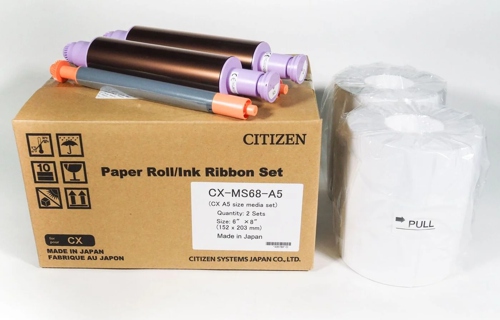
Example of an original Citizen label, found on every carton of genuine consumables.
False economy
The final message of this article is simple: Why risk voiding your printer warranty, getting poor print quality, and shortening your printer’s lifespan just to save a few percent on initial costs?
It’s a classic case of “false economy” – the path taken by those who believe they’re saving money.
The new precision-engineered Citizen CY-02 printer you can trust is designed with accuracy in mind, and its genuine media are expertly matched to work in harmony with the intended model, delivering the highest reliability and print quality possible.
So why would anyone take the risk?
source: https://www.citizen-systems.com/en/photo-blog/blog-the-false-economy-fake-media-in-dye-sub-photo-printing
Additional note:
As of December 2021, there are no replacement consumables available on the market for color dye-sublimation printers by Citizen. The only manufacturer of media for all photo printer brands (Mitsubishi, Citizen, HiTi) is DNP. The purpose of this article is to highlight that even searching for replacement media is economically unjustified – if such media ever appear, they would be only a few percent cheaper, while the risks associated with using them (warranty, quality, printer lifespan) would be very high.